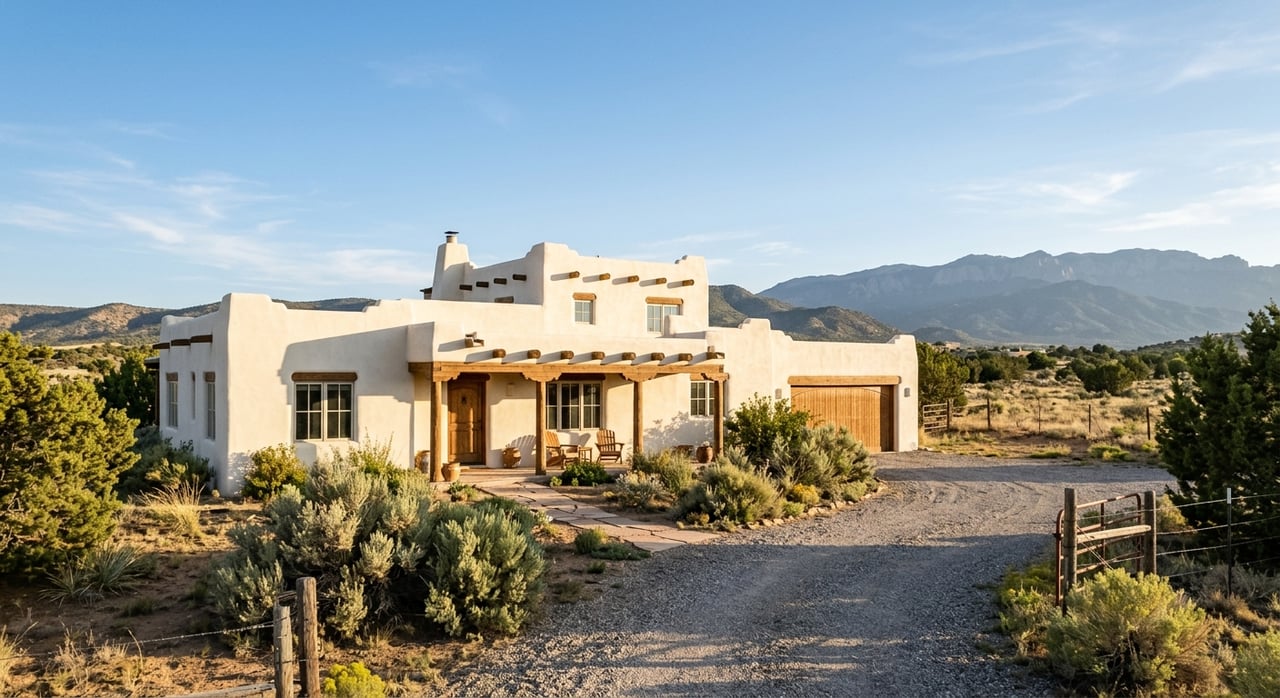
Is La Tierra Right For Your View-Filled Santa Fe Retreat?
May 21, 2026
May 21, 2026
Looking for big views, more breathing room, and a Santa Fe address that still keeps downtown within easy reach? La Tierra often lands on the shortlist for buyers who want a semi-rural retreat without feeling too far removed. If you are wondering whether this northwest Santa Fe area fits your lifestyle, the key is understanding not just the scenery, but also the practical details that come with acreage living. Let’s dive in.
La Tierra is a residential area in northwest Santa Fe County reached through the Camino La Tierra and NM-599 corridor. County materials describe Camino La Tierra as an arterial road serving many subdivisions north of the city limits, which helps explain why the area feels tucked away yet connected.
Recent listings commonly describe La Tierra as about 12 to 15 minutes from downtown Santa Fe. For many buyers, that balance is the appeal. You can enjoy a quieter setting, expansive skies, and a more open landscape while still having relatively quick access to the city.
La Tierra is best understood as a view-driven, semi-rural retreat market. Properties here often emphasize privacy, mountain outlooks, and larger parcels rather than a dense neighborhood feel or a uniform community design.
If you are searching for land, views, and separation between homes, La Tierra stands out. Recent and current inventory has included properties of about 10.4, 10.7, 11.59, 16.27, and 19.39 acres, which gives you a sense of the larger-parcel pattern buyers often find here.
Listing descriptions consistently highlight sunrise and sunset views, along with vistas of the Jemez and Sangre de Cristo Mountains. Some parcels are positioned on ridges or elevated sites, which can add to that wide-open Santa Fe feeling many buyers want.
Privacy is another recurring theme. In La Tierra, the retreat aspect often comes from both the lot size and the siting of the home, not just from landscaping or gates.
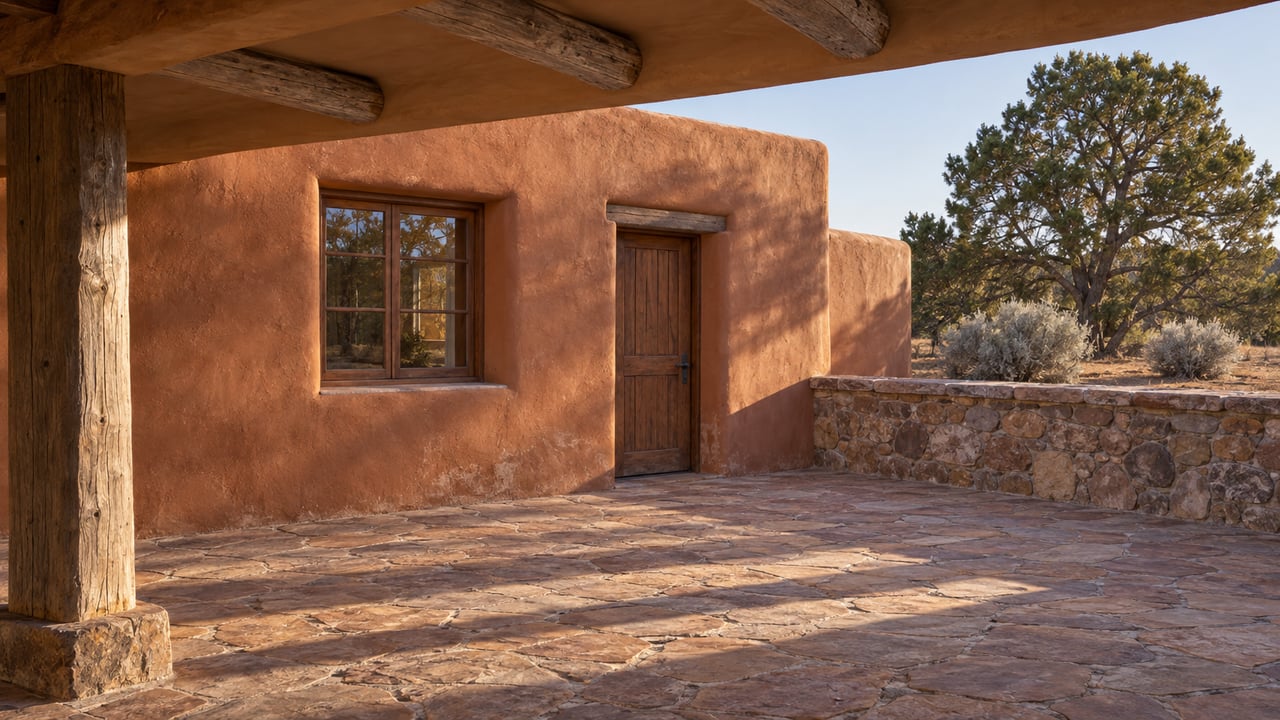
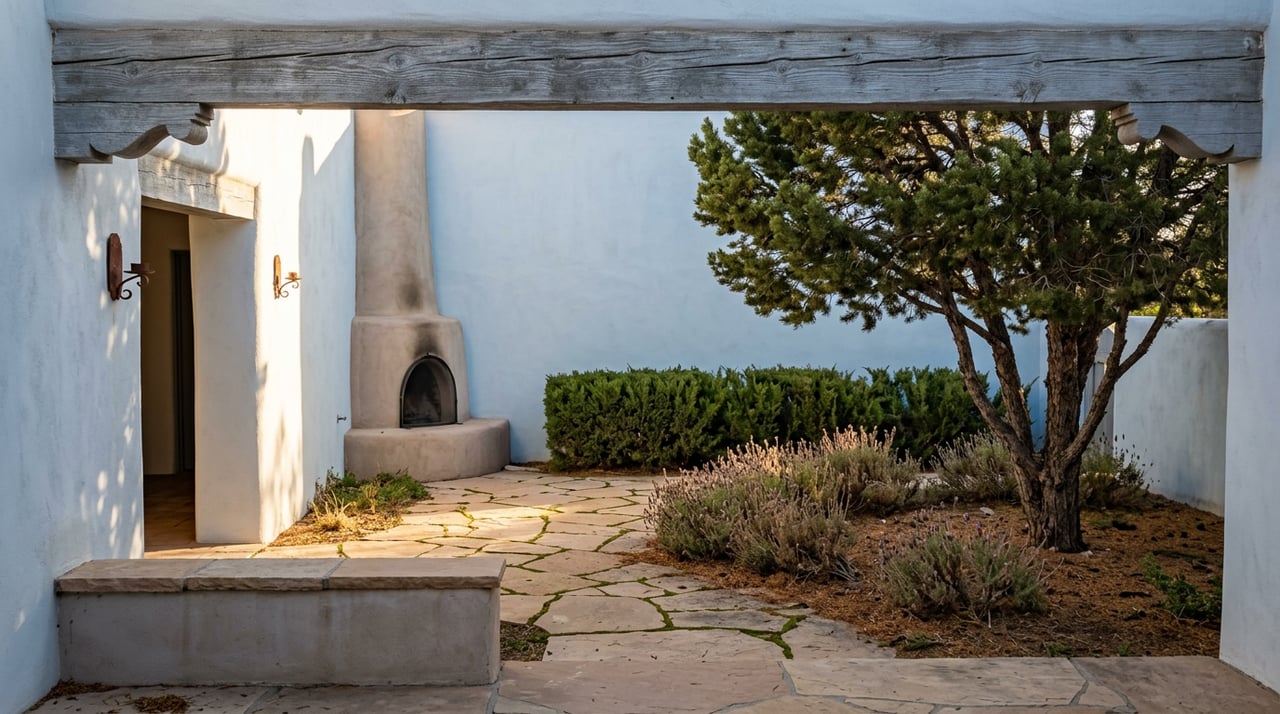
One thing many buyers appreciate is that La Tierra does not appear to follow a single architectural formula. Recent examples include a custom log house, a pueblo-style adobe home, an adobe-and-frame home, and a contemporary block-construction home.
That variety can be a plus if you want a more individual property rather than a highly uniform streetscape. It also means your search should stay focused on the features that matter most to you, such as construction style, outdoor living, layout, and how the home is placed on the land.
In La Tierra, water is one of the first things you should confirm on any property. Santa Fe County records say the West Sector water system serves La Tierra and nearby northwest subdivisions, and that line is fed from a City of Santa Fe storage tank.
At the same time, current listings show that some parcels in the area have wells. That means you should not assume every property has the same setup, even within the same general area.
When you are evaluating a home or lot, ask whether the property is on:
If a property uses a domestic well, Santa Fe County guidance says the owner must participate in the Domestic Well Use Metering Program. County guidance also says owners should keep records such as the Office of the State Engineer permit, the well log, and water-quality tests.
This is one of those details that can shape both your monthly costs and your long-term comfort level with the property. A careful review early in the process can save you time and surprises later.
Road responsibility in La Tierra is not always simple, and this is another area where buyers should do property-specific homework. County contract records say the County is responsible for maintenance, repair, and improvements to County roads within the La Tierra Subdivision.
At the same time, county records also show association involvement in road improvements. A 2017 agreement shows The La Tierra Association, Inc. contributing up to $78,000 toward double chip-seal improvements, and county minutes note an association representative saying the HOA had contributed more than $300,000 to road improvements and spent about $10,000 a year on right-of-way upkeep.
What does that mean for you? It means the answer may be layered rather than all-or-nothing. Depending on the parcel, road care may involve the County, an association, or both.
Before you buy, it is smart to verify:
La Tierra can feel more flexible than a highly structured planned community, but that does not mean every property comes without dues or shared obligations. One recent La Tierra parcel listing showed a $40 monthly HOA fee.
That suggests assessments or dues can be parcel-specific rather than identical across every property marketed as La Tierra. If you are comparing homes or land in the area, be careful not to assume the same rules or costs apply across the board.
This is especially important if you are deciding between an existing home and vacant land. The ownership costs and maintenance expectations may differ more than you expect.
La Tierra is covered by the Agua Fria Fire District, which also has a La Tierra substation. For buyers considering larger lots or a more rural setting, it is helpful to know which district serves the property and where the nearest substation is located.
This may not be the most exciting part of your home search, but it is part of understanding how the area functions day to day. In semi-rural markets, service details can matter just as much as the view.
Many buyers considering La Tierra also look at Las Campanas or the Tano Road corridor. These areas can overlap in appeal, but they offer different ownership experiences.
Las Campanas is the more structured, amenity-centered option. The Las Campanas Owners Association describes a 4,900-acre community with a master association, 24-hour security, and a separate water co-op, while The Club at Las Campanas operates as a private club with two Jack Nicklaus Signature golf courses.
By comparison, La Tierra is generally less club-driven and less centered on a formal amenity package. If you want privacy, land, and views without buying into a private-club framework, La Tierra may feel like a better fit.
Tano Road offers a broader corridor-style northwest setting. County road-maintenance documents list Tano Road as a county road with both asphalt and dirt segments, and current listings along that corridor range from 2.5-acre view lots to 23.3-acre ridgetop parcels.
Compared with that wider corridor, La Tierra appears more subdivision-oriented and more association-influenced. It still offers a semi-rural feel, but often with a somewhat more defined neighborhood framework than the broader Tano Road area.
La Tierra may be worth a serious look if you want:
It may be less ideal if you want:
In other words, La Tierra tends to reward buyers who love the land-focused side of Santa Fe and are comfortable doing a little more due diligence. That trade-off is often exactly what creates the privacy and sense of retreat people come here to find.
Because La Tierra is so property-specific, a good buying process here is all about asking the right questions early. A beautiful setting is only part of the decision.
Here is a practical checklist to keep in mind:
If you are relocating or buying a second home, this local context matters even more. What looks similar on a map can function very differently from parcel to parcel.
La Tierra can be a wonderful fit if your idea of Santa Fe living includes big skies, meaningful privacy, and room to spread out. The best way to know if it is right for you is to match the beauty of the setting with a clear understanding of the property’s water, road, and ownership details. If you want help narrowing down the right fit, Bunny Terry can help you explore Santa Fe with a local, detail-driven perspective.
Stay up to date on the latest real estate trends
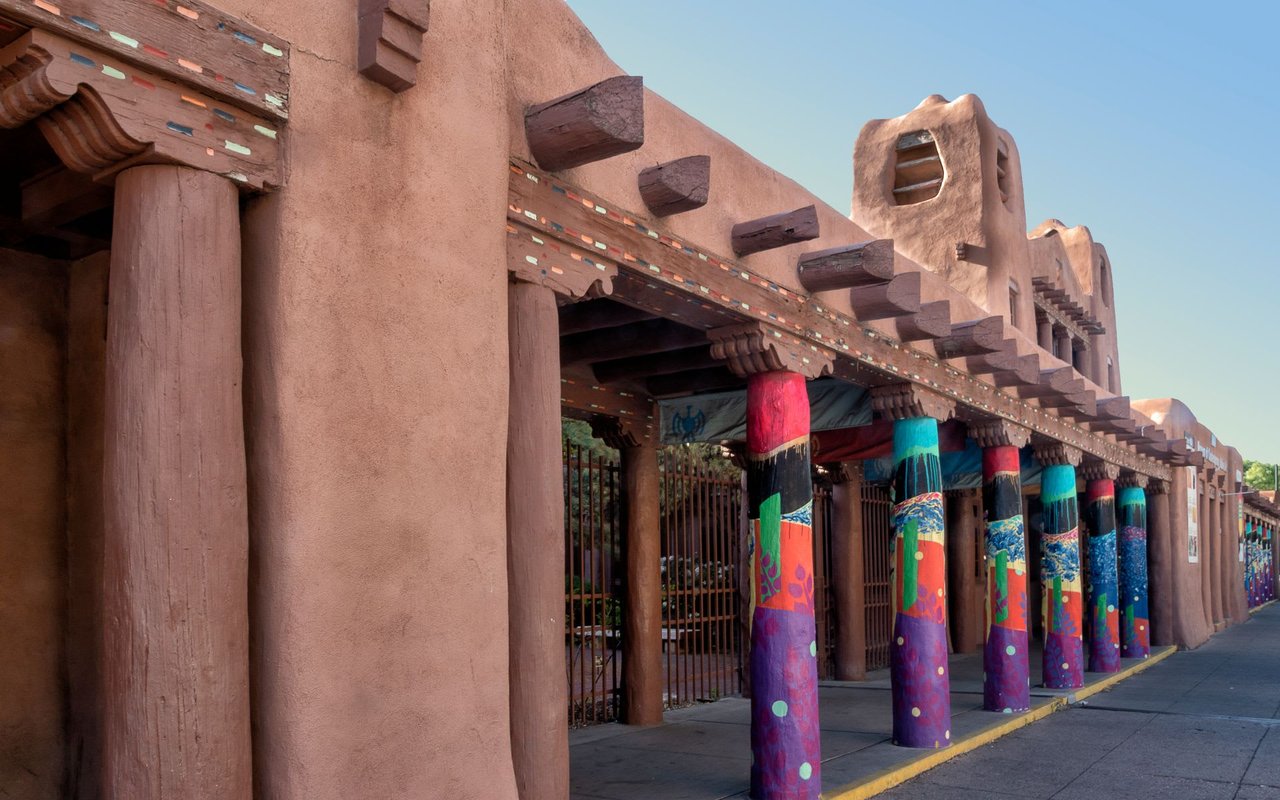
Moving to Santa Fe
You don't have to become someone new to find your niche in Santa Fe
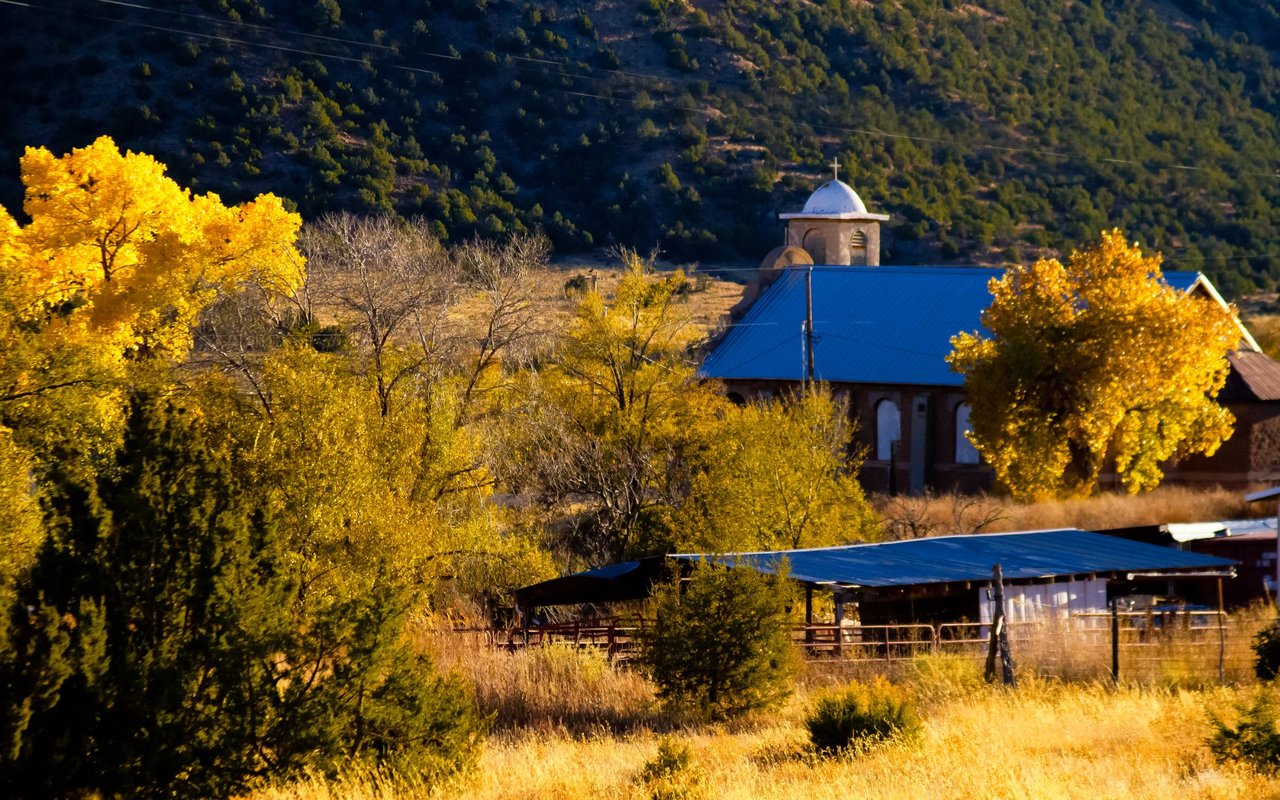
You'll find art everywhere in Santa Fe County


We are committed to making each transaction the least complicated and easiest one you’ve ever been involved in. In old school speak, we bring our best professionalism to each and every transaction. We maintain a strong work ethic and believe that the client/broker relationship is a partnership built on honesty, trust, confidentiality and mutual respect. Let’s get started on this journey to fulfill your Santa Fe Real Estate dream!
Let's Work Together
Bunny Terry
211 East Palace Avenue Santa Fe NM 87501