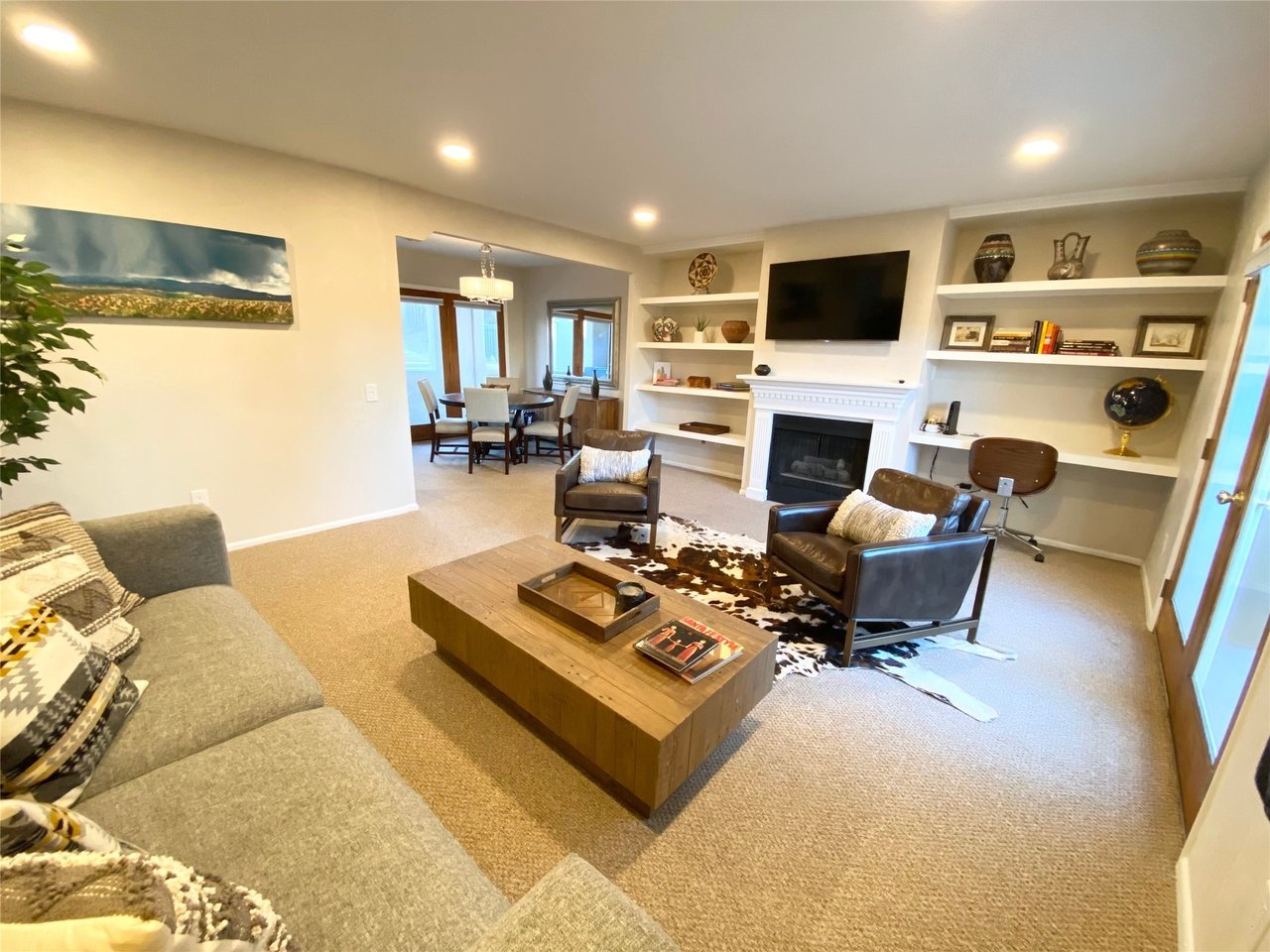
What to Know About Santa Fe Short-Term Rental Property
January 28, 2026
January 28, 2026
If you spend any time online watching real estate investing content, it’s easy to believe that short-term rentals are the ultimate path to easy returns.
You’ll see influencers sharing impressive numbers, beautifully styled properties, and simple formulas that make short-term rentals feel effortless — even romantic.
But here’s the reality many buyers don’t realize:
Those investors are almost never operating in cities like Santa Fe, or in many U.S. cities that have created increasingly restrictive short-term rental regulations.
And that difference changes everything.
Santa Fe’s short-term rental ordinance exists to balance tourism with livability.
The intent is to:
Protect residential neighborhoods
Preserve housing availability for long-term residents
Reduce noise, traffic, and parking impacts
Ensure safety, accountability, and tax compliance
These rules aren’t anti-investor. They’re designed to protect quality of life for people who actually live here.
Understanding that context is key to understanding why short-term rental investing in Santa Fe is complex.
Most buyers are surprised to learn that securing a short-term rental isn’t just about finding the right property — it’s about understanding zoning, permits, and long-term compliance before you buy.
Here are some of the biggest hurdles buyers face:
This is one of the most misunderstood aspects of investing in Santa Fe.
Short-term rental permits do not transfer with a property — ever.
If a property is sold, the permit terminates and reverts back to the City of Santa Fe. A new owner must apply for a new permit, and that application is subject to:
Permit availability
Proximity rules
Zoning requirements
Even if a property is currently operating as a short-term rental, that does not mean the next owner will be able to do the same.
While most residentially zoned properties require a short-term rental permit, some commercially zoned properties do not.
In certain zoning districts, short-term rentals may be allowed without a permit, instead operating under different registration or business license requirements.
A well-known example is Fort Marcy Condominiums, which is zoned BCD (Business Capitol District). Because of this commercial zoning, short-term rental permits are not required there — a major reason those units are often attractive to investors.
This is a perfect example of why zoning knowledge matters just as much as the property itself.
In residential zones, Santa Fe limits the total number of short-term rental permits available citywide. Once that cap is reached, new applicants are placed on a waiting list, with no guaranteed timeline.
Buying a home hoping a permit becomes available later is a risky strategy.
Santa Fe limits each natural person to a single short-term rental permit. This restriction is intentionally designed to prevent large-scale speculation and preserve housing stock for residents.
Even when legally permitted, operating a short-term rental requires ongoing involvement:
A local operator available 24/7 who can arrive within one hour
Inspections and safety compliance
Parking and occupancy limits
Noise restrictions
Lodgers’ tax, gross receipts tax, and income tax
Annual renewals and record-keeping
This is hospitality plus regulation — not hands-off investing.
Many buyers arrive with expectations shaped by online success stories.
But most of those examples come from:
Lightly regulated markets
Areas without permit caps
Cities without proximity rules
Places where zoning is far more permissive
When you apply those strategies to Santa Fe, the math — and the risk — changes dramatically.
This is where local expertise becomes invaluable.
A savvy Realtor helps buyers:
Understand what is legally possible before they purchase
Identify properties where short-term rentals are structurally viable — or not
Navigate zoning distinctions that dramatically affect value
Explore alternative strategies that align with Santa Fe’s regulatory landscape
That guidance can prevent costly mistakes and open doors buyers didn’t even know to look for.
Here’s what many buyers need permission to hear:
There is nothing inherently magical about a short-term rental.
What is powerful is:
Predictable income
Reduced stress
Fewer regulatory hurdles
A strategy that works with the city, not against it
Short-term rentals are just one option — and often not the best or only one.
We want you to live your dream.
We also want you to understand the cost that dream may create — in terms of stress, time management, compliance, and ongoing responsibility.
Santa Fe rewards thoughtful, informed investment. And when buyers approach the market with clarity instead of hype, they’re far more likely to succeed
Stay up to date on the latest real estate trends

Moving to Santa Fe
You don't have to become someone new to find your niche in Santa Fe

You'll find art everywhere in Santa Fe County



We are committed to making each transaction the least complicated and easiest one you’ve ever been involved in. In old school speak, we bring our best professionalism to each and every transaction. We maintain a strong work ethic and believe that the client/broker relationship is a partnership built on honesty, trust, confidentiality and mutual respect. Let’s get started on this journey to fulfill your Santa Fe Real Estate dream!
Let's Work Together

Bunny Terry
211 East Palace Avenue Santa Fe NM 87501